

Growers and those invested in the ag industry get a first-hand glimpse at current potato trials
Like a science-driven triathlon, the three field days held at the Hancock, Langlade and Rhinelander Agricultural Research Stations paint a comprehensive picture of potato, cover cropping, and vegetable trials being conducted by University of Wisconsin (UW) Extension specialists.
Held on consecutive Thursdays, this year falling on July 9, 16, and 23, the field days showcase ongoing potato and vegetable research in central and northcentral Wisconsin carried out by UW scientists and collaborators to help growers continue raising high-yielding crops efficiently and sustainably.
The 412-acre Hancock Agricultural Research Station (HARS), located in the state’s Central Sands potato production area, focuses on developing and evaluating ways to grow vegetables sustainably in the region’s sandy, fast-draining soils above a high water table.
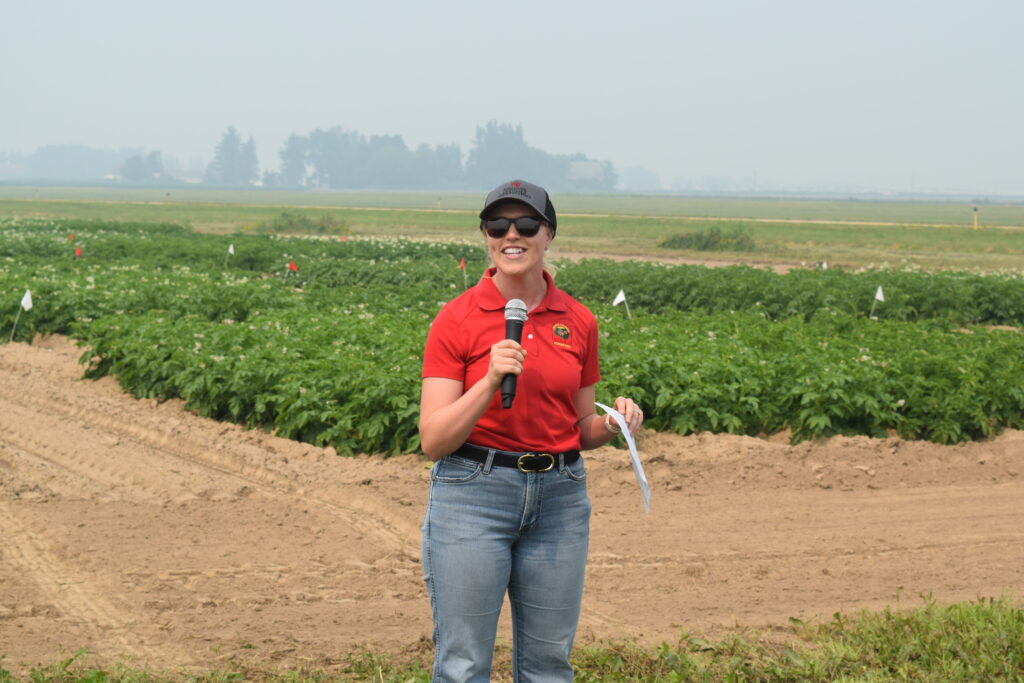
On July 9, HARS Superintendent Troy Fishler welcomed field day attendees and introduced the day’s master of ceremonies, UW-Extension Agricultural Water Quality Outreach Specialist Guolong Liang.
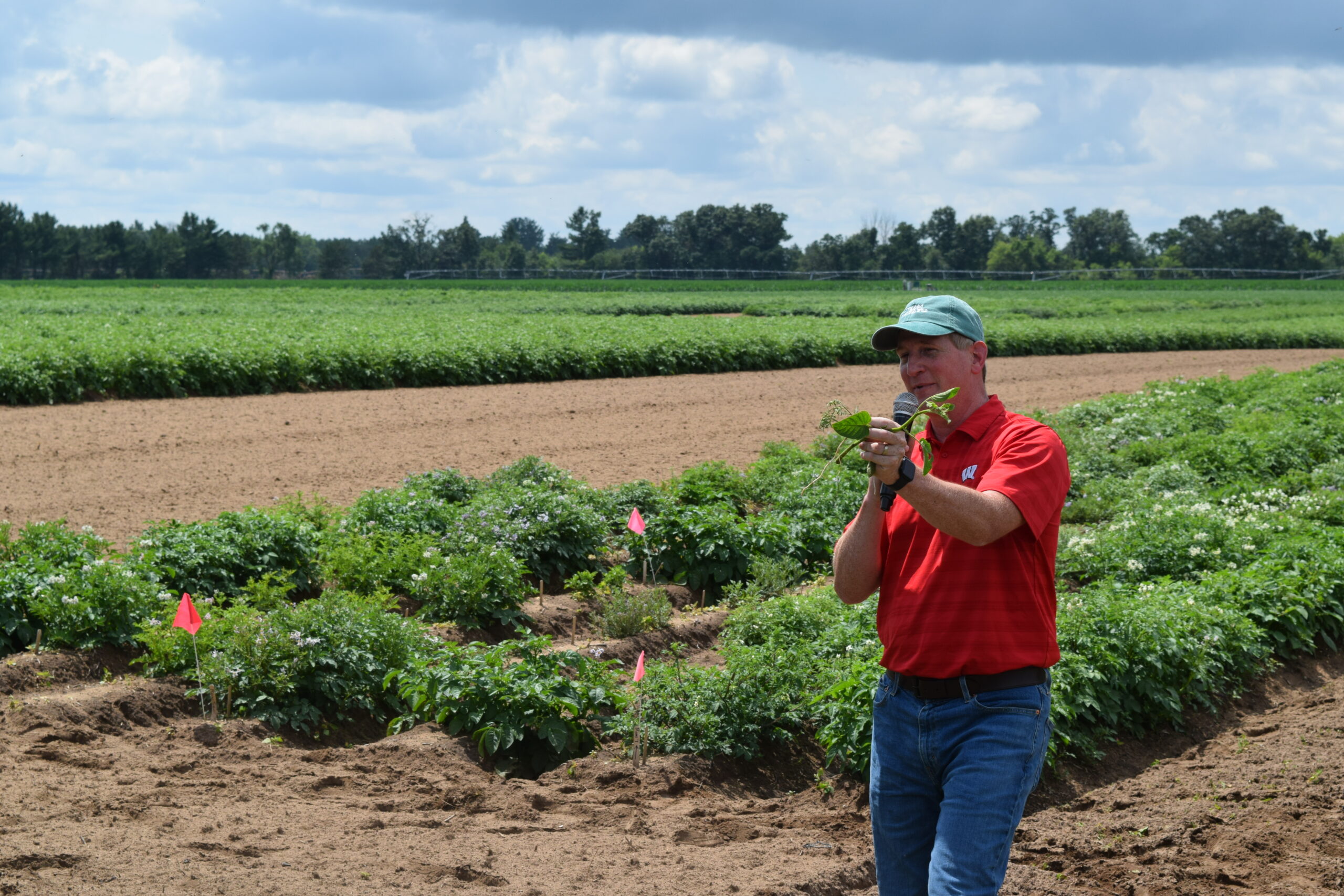
Wagon tours and potato research updates included presentations by Dr. Russell Groves and Ph.D. student Claire Schloemer, UW Department of Entomology, on “Insect Management in Potato & Processing Vegetables,” and Dr. Jeffrey Endelman, UW Department of Plant and Agroecosystem Sciences, who gave a “Potato Breeding Program Update.”
The work by Dr. Groves and Schloemer includes research on the first principles of Potato Virus Y (PVY) disease management, Colorado potato beetle (CPB) insecticide resistance, and looking at coordinating insecticide application and crop rotation across multi-farm acreage to prevent resistance.
Dr. Endelman’s Potato Breeding Program is conducting variety trials to determine which potatoes are resistant to CPB, including the evaluation of 300 wild diploid potato varieties with desirable traits and genetic variations for resistance.
U.S. Department of Agriculture (USDA) Agricultural Research Service scientist Dennis Halterman talked about “Developing Wild Materials for Diploid Breeding,” and Dr. Yi Wang, UW Department of Plant and Agroecosystem Sciences, discussed “Using Precision Agriculture Technologies in Vegetable Crop Production.”
Dr. Halterman is working on drought- and disease-resistant wild varieties from South and Central America for diploid potato breeding. The varieties are maintained at the U.S. Potato Genebank in Sturgeon Bay, Wisconsin.